Spring storms in Metro Atlanta and North Georgia often bring hail, and hail damage is one of the easiest roof problems to miss. A roof can look fine from the driveway while the shingles have been bruised badly enough to shorten their life and let water in months later. Here is how to tell if hail has damaged your roof and what to do about it.
By V. Sanchez · Updated November 5, 2026 · 3 min read
Asphalt shingles are covered in granules that protect them from the sun. When hail hits, it can knock those granules loose or crack the mat underneath.
The shingle may not leak right away, but the damaged spot breaks down faster and can start leaking long after the storm is forgotten. That delay is why it pays to check your roof soon after a hail storm.
Look at gutters, downspouts, roof vents, window wraps and even your mailbox. If they are dented, the roof took hits too.
A sudden pile of sand-like granules in the gutters or at the bottom of downspouts after a storm is a common sign.
Chipped paint and torn screens point to hail large enough to matter.
If roofers are working on your street after the same storm, your roof deserves a look.
The National Weather Service calls a thunderstorm severe when it brings hail at least 1 inch across, about the size of a quarter. That is the size that triggers severe thunderstorm warnings.
Whether your roof was actually damaged depends on more than size, including the wind and the age and condition of your shingles. That is why an up-close inspection matters. Source: National Weather Service, Peachtree City office.
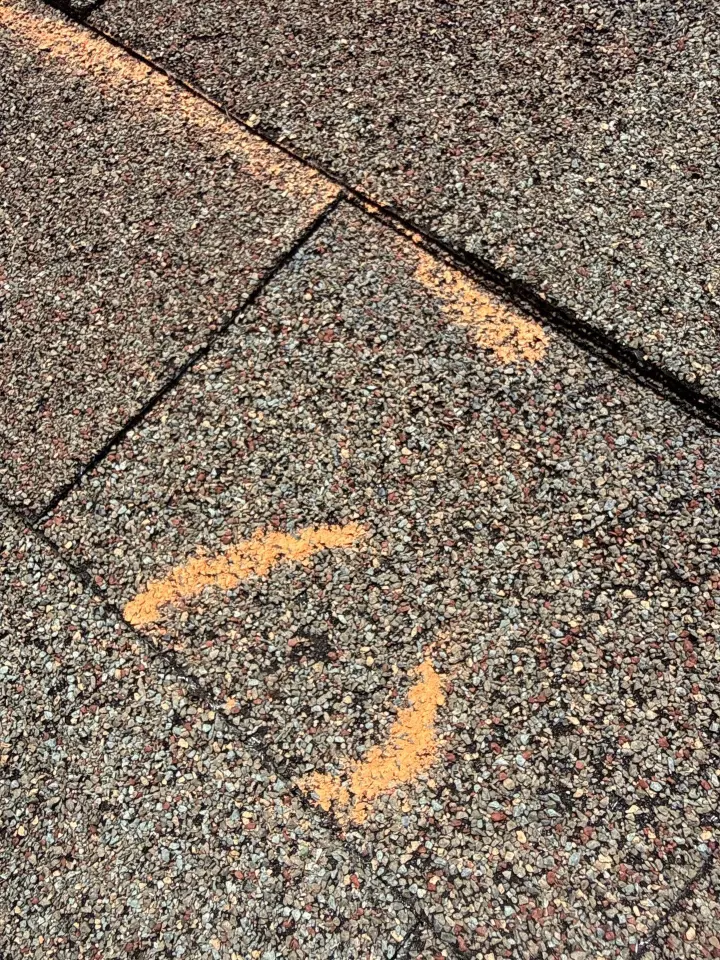
On the roof itself, hail damage usually shows up as dark spots where granules are missing, soft or bruised areas in the shingle, or small cracks and splits. Damage tends to be random rather than in a pattern. Roofers often mark each hit with chalk during an inspection so the damage is easy to photograph and show your adjuster.
Photos from our own hail inspections.

Dark spots where the granules were knocked off, circled in chalk.
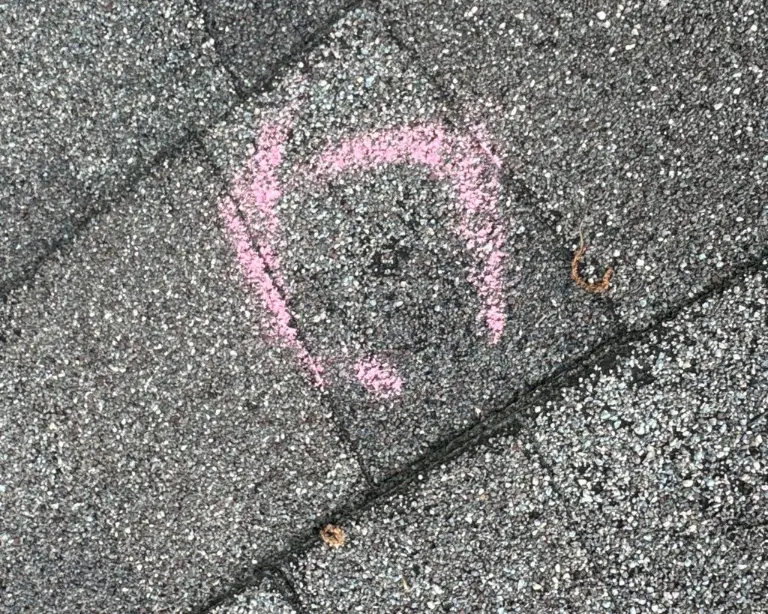
Roofers circle each hit so it is easy to photograph and show your adjuster.
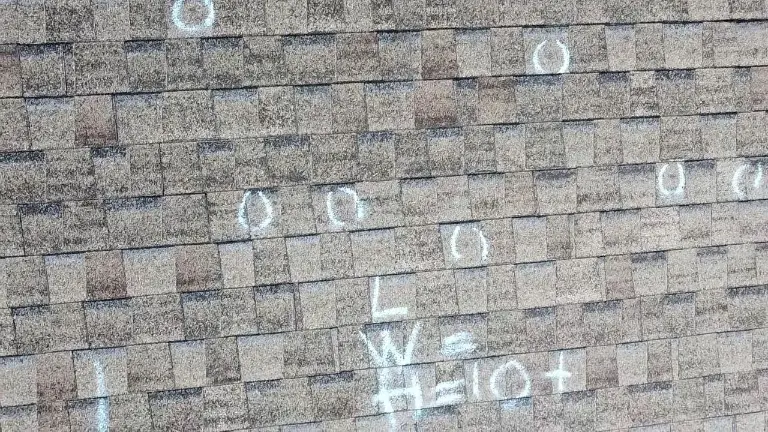
Hail hits are scattered across a slope. A marked test square shows how many there are.
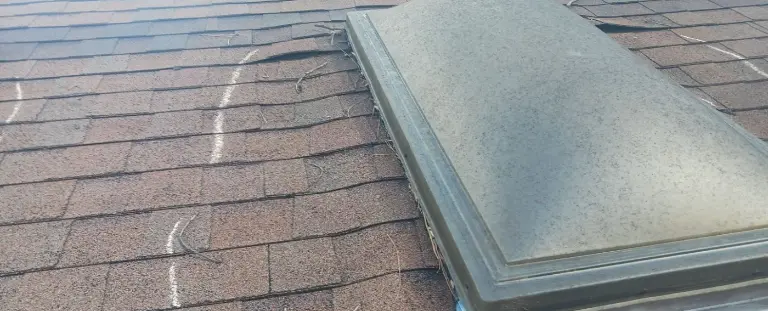
Hits are often marked near skylights, vents and other spots that need a close look.
Walking a roof is dangerous, especially after a storm when surfaces may be wet or damaged. Leave the up-close inspection to a professional with the right safety gear.
Note the date of the storm and take photos of any dents or damage you can see from the ground.
Schedule a professional roof inspection. Ask for photos of anything they find.
If there is damage, contact your insurance company to start a claim. Policies set their own deadlines, so do not wait.
If water is already coming in, get the area tarped right away to prevent more damage. See our emergency roof tarping page.
For more on what happens next, see our storm damage page and our roof insurance claim guide.
No. A bruised shingle may not leak at first, but the damaged spot breaks down faster and can start leaking months after the storm.
You can look for clues like dented gutters and vents, granules in the gutters or chipped siding. Damage on the shingles themselves usually takes an up-close inspection to see.
Hail is usually a covered event on homeowners policies, minus your deductible, but every policy is different. See our roof insurance claim guide.
Written by
V. Sanchez
Emergency Roofing Solutions · Published February 17, 2026 · Updated November 5, 2026
Emergency Roofing Solutions serves homeowners across Metro Atlanta and North Georgia. Prefer to talk? Call 404-474-4222. A live person answers 24/7.