A roof insurance claim can cover a major repair or a full replacement after storm damage, but small mistakes can slow it down or leave damage out of the estimate. Here are seven common mistakes and how to avoid them.
By V. Sanchez · Updated November 5, 2026 · 3 min read
Policies set deadlines for reporting damage, and damage that sits for months is harder to tie to a specific storm. Get an inspection soon after a hail or wind storm and check your policy for its time limits.
Write down the storm date and take photos of anything you can see: dents on gutters, missing shingles, water stains inside. A professional inspection with photos gives you a clear record of what the roof looks like.
Most policies expect homeowners to take reasonable steps to prevent further damage. If water is getting in, get the area tarped and keep the receipt. See our emergency roof tarping page.
The adjuster’s inspection shapes your estimate. Having your roofer there helps make sure all the damage is seen and noted, including damage on slopes that are hard to see.
Your insurer will send a written estimate, often called the scope of loss. Read it carefully, compare it with your roofer’s findings and ask questions about anything that looks missing.
After big storms, crews from out of state go door to door. Be careful with anyone who pressures you to sign on the spot, asks for large payments up front or does not have a local address you can verify. Choose a local roofer with reviews you can check.
Be wary of any contractor who offers to waive or absorb your deductible. Your deductible is your responsibility under your policy, and offers like that can cause problems with your claim.
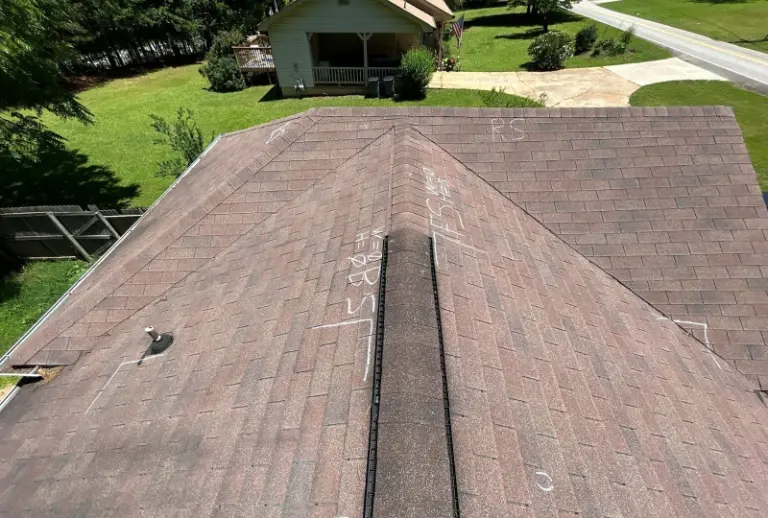
Photos from our own storm damage inspections.
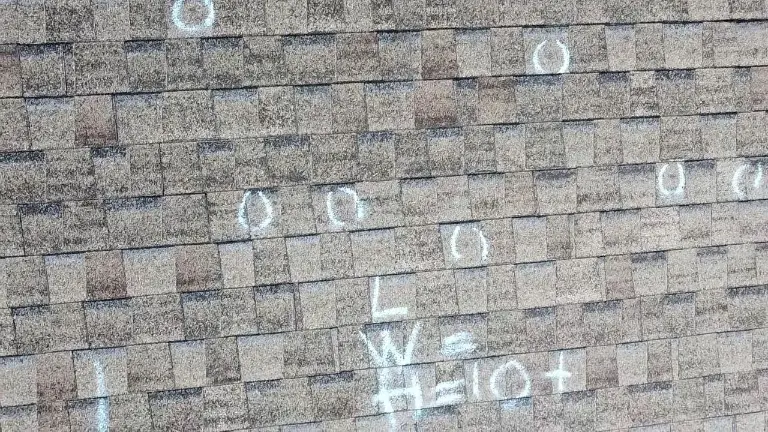
Hail hits counted inside a marked square, the way adjusters and roofers check a slope.
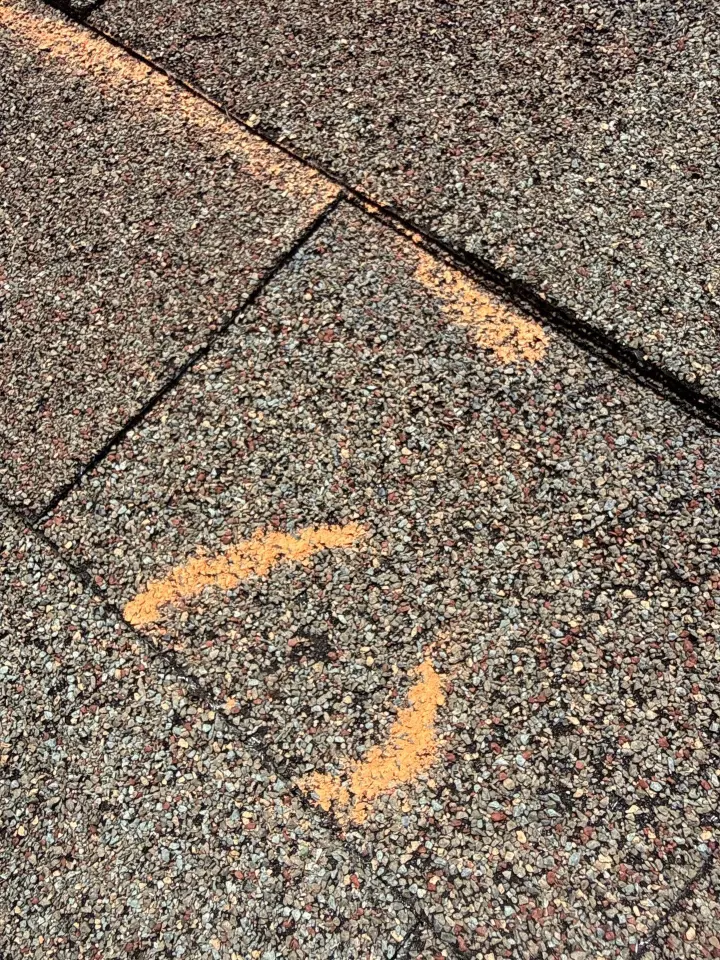
Individual hail hits circled in chalk so they show up clearly in photos.
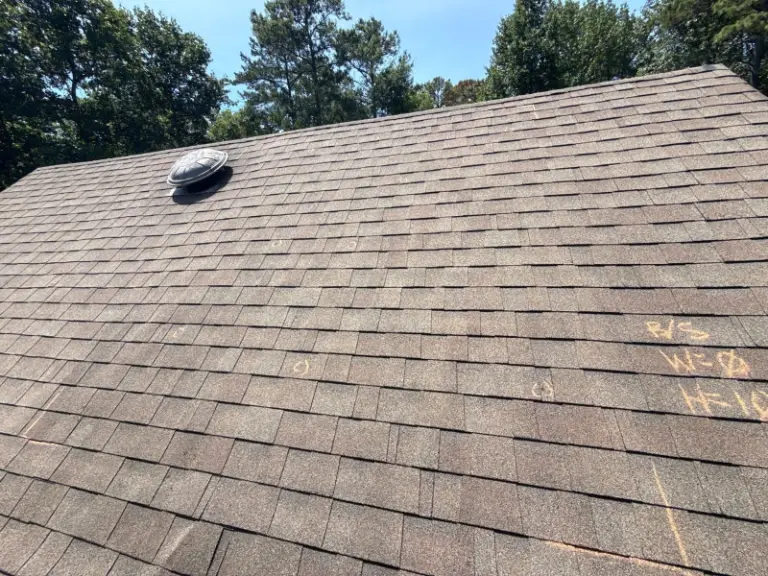
Each slope is labeled and photographed, so nothing gets left out of the estimate.
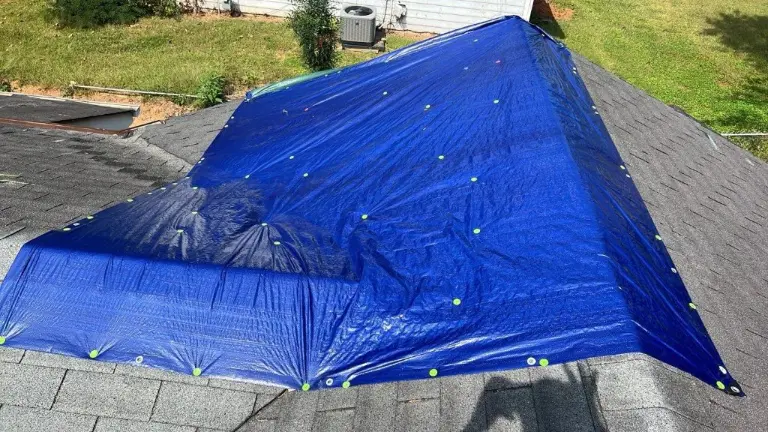
A tarp stops more water from getting in while the claim is in progress. Keep the receipt.
Georgia has a law for homeowners who sign a roofing contract that will be paid from an insurance claim (O.C.G.A. § 10-1-393.12).
If your insurer tells you in writing that all or part of your claim isn’t covered, you can cancel the roofing contract before midnight on the fifth business day after you get that notice.
The roofer can’t require payment until those five business days have passed, except for emergency work like tarping that you agree to in writing.
A roofing contractor can’t represent you or negotiate your claim with your insurer. Be wary of anyone who says they will.
This is a plain-English summary, not legal advice. See the Georgia law section of our insurance guide or the Georgia Code.
You stay in charge of your claim. A good roofer helps by documenting the damage, meeting your adjuster and doing the work right.
Read our full roof insurance claim guide or see how we help on our insurance claims page.
It depends on your policy, so check it or ask your agent. Either way, filing soon after the storm makes the damage easier to tie to that storm.
Many homeowners get a free roof inspection first. A roofer can find hail and wind damage you can’t see from the ground and tell you whether it looks worth filing.
In Georgia, a roofing contractor can’t represent you or negotiate your claim. Your roofer can meet the adjuster on site and show the damage, but you stay in charge of the claim.
Written by
V. Sanchez
Emergency Roofing Solutions · Published June 16, 2026 · Updated November 5, 2026
Emergency Roofing Solutions serves homeowners across Metro Atlanta and North Georgia. Prefer to talk? Call 404-474-4222. A live person answers 24/7.