A Tree Fell on My Roof: What to Do in the First 24 Hours
Metro Atlanta is full of mature oaks and pines, and strong storms bring down limbs and whole trees every year. If a tree has landed on your house, the first few hours matter. Here is what to do, step by step.
By C. Purcell · Updated November 5, 2026 · 3 min read
Safety first
Get everyone to safety
If the tree has broken through the roof or ceiling, get everyone out of that part of the house. Stay away from sagging ceilings and any downed power lines, and call 911 if anyone is hurt or lines are down. If there is any chance of a gas leak, leave the house and call your gas company.
What to do, step by step
Get everyone to safety
Get everyone out of the damaged part of the house, stay away from sagging ceilings and downed lines, and call 911 if anyone is hurt.
Do not try to remove the tree yourself
A tree resting on a roof can shift without warning, and cutting it can cause more damage or serious injury. Tree removal from a roof is a job for a professional tree service working with your roofer.
Stop water from getting in
The next rain can cause more damage than the tree did. Move belongings away from openings, catch water with buckets and towels, and turn off power to areas where water is near lights or outlets. Then call a roofer for emergency tarping. Once the tree is off, an opening in the roof needs a properly secured tarp until the permanent repair can be made. Learn more about emergency roof tarping.
Document everything
Take photos and video of the tree, the roof, the attic and any interior damage before anything is moved, if it is safe to do so. Keep every receipt, including tree removal, tarping and any hotel stay. Your insurer will want to see them.
Call your insurance company
Report the damage and write down your claim number and the adjuster’s contact information. Many homeowner policies cover reasonable steps to prevent further damage, such as tarping, so ask about that when you call. Our roof insurance claim guide explains the rest of the process.
Get a full roof inspection
A falling tree can crack rafters, break decking and damage areas you cannot see from below. Once the tree is removed, have the whole roof inspected, not just the obvious hole, so the repair estimate covers everything.
What this looks like on a real job
Photos from one of our own tree-damage calls.
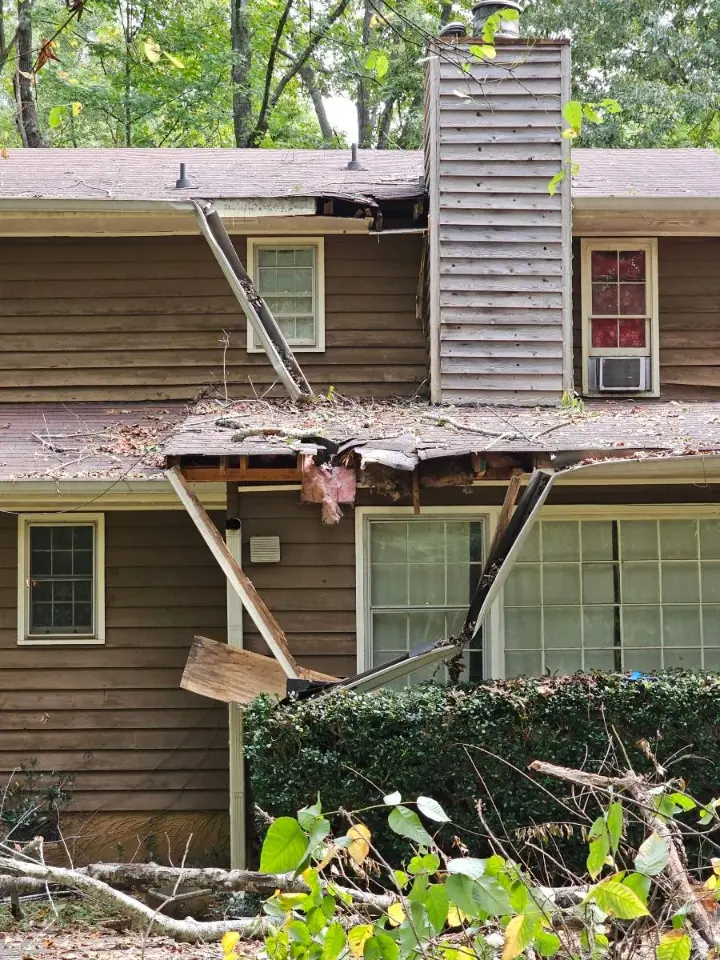
The damage
A tree came down through the roof and siding. Areas like this need a full inspection, not just a patch.
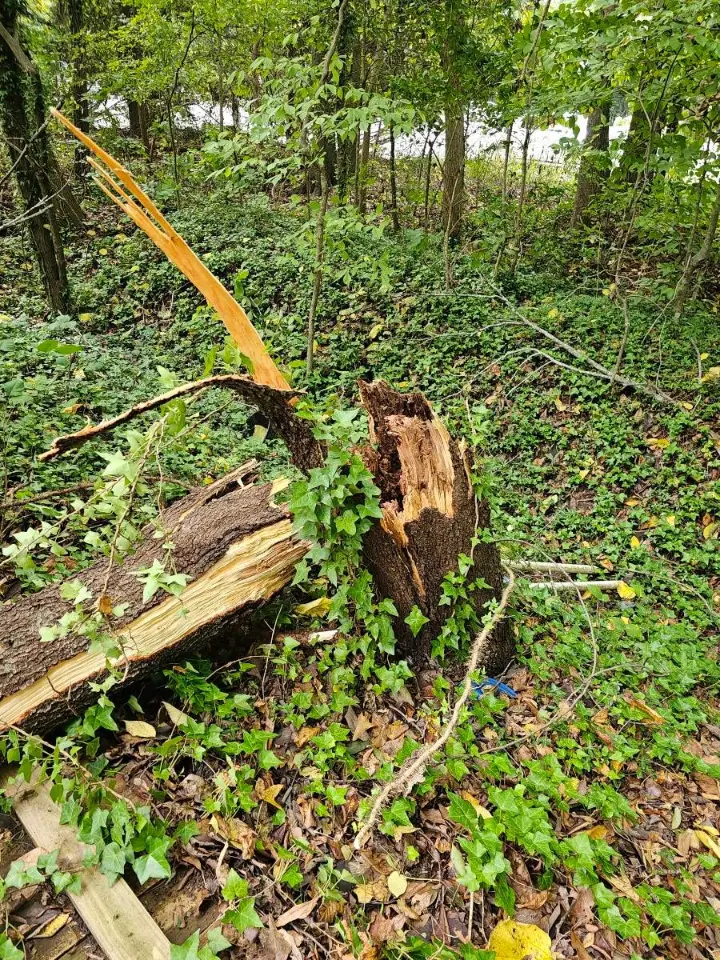
The tree
The snapped trunk. Removal from a roof is a job for a professional tree service.
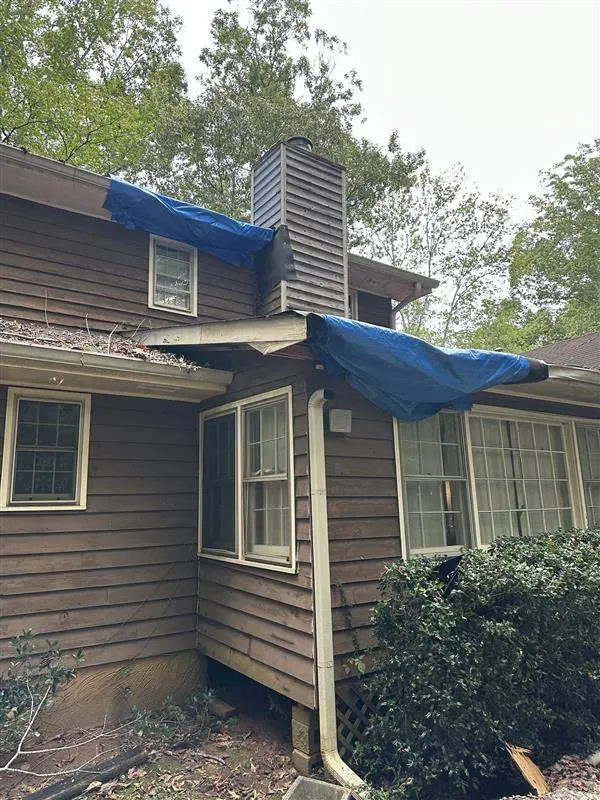
Tarped right away
Once the tree was off, the openings were covered to keep the next rain out.
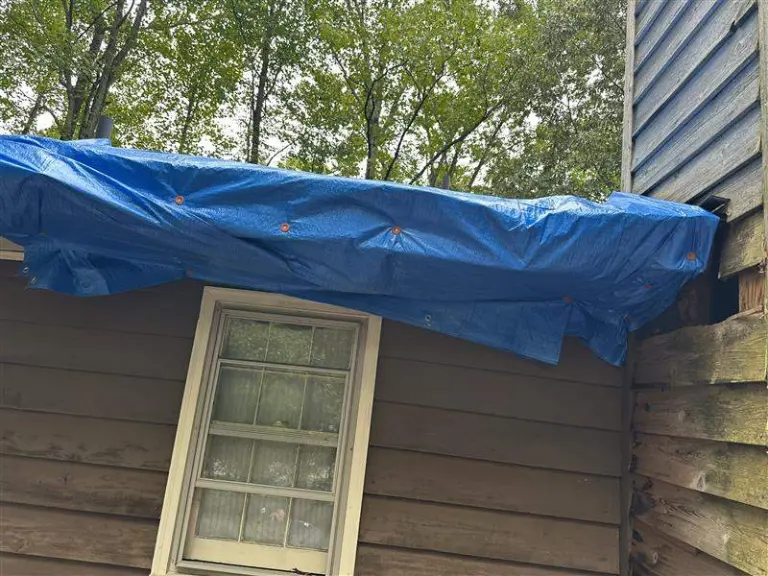
Sealed at the edges
The tarp is run over the damaged eave and fastened so wind and rain can’t get under it.
How homeowners insurance usually handles a fallen tree
Damage to your home
Standard homeowners policies generally cover the damage a falling tree does to your house and the things inside it, including trees brought down by wind.
Removing the tree
When a tree hits a covered structure, removal is generally covered up to a limit set by your policy. A tree that falls without hitting anything usually is not.
A neighbor’s tree
It generally doesn’t matter whose tree it was. You file with your own insurer, which may then seek repayment from the neighbor’s insurer.
Every policy is different, so ask your agent how yours works. Source: Insurance Information Institute.
Fallen tree FAQs
Will insurance pay to remove the tree?
If the tree hit your house or another covered structure, removal is generally covered up to your policy’s limit. Ask your agent, and keep the tree service’s receipt.
Should I put a tarp on the roof myself?
No. A roof with a tree on it can shift, and wet, damaged roofs are dangerous to walk. Stay inside the safe part of the house, catch water with buckets and call a roofer for emergency tarping.
What if it was my neighbor's tree?
It generally doesn’t matter whose tree it was. You file with your own insurance company, and it may seek repayment from your neighbor’s insurer.
Written by
C. Purcell
Emergency Roofing Solutions · Published April 21, 2026 · Updated November 5, 2026
Schedule Emergency Tarping
Tell us what happened and where the damage is, and we’ll get back to you fast. Water coming in right now? Call 404-474-4222, 24/7.